
From thermal pixels to PV work orders: a practical anomaly workflow
A thermal image is evidence—not a diagnosis. The value comes from controlled capture, ML/DL-assisted classification, engineering review, and precise asset linkage.
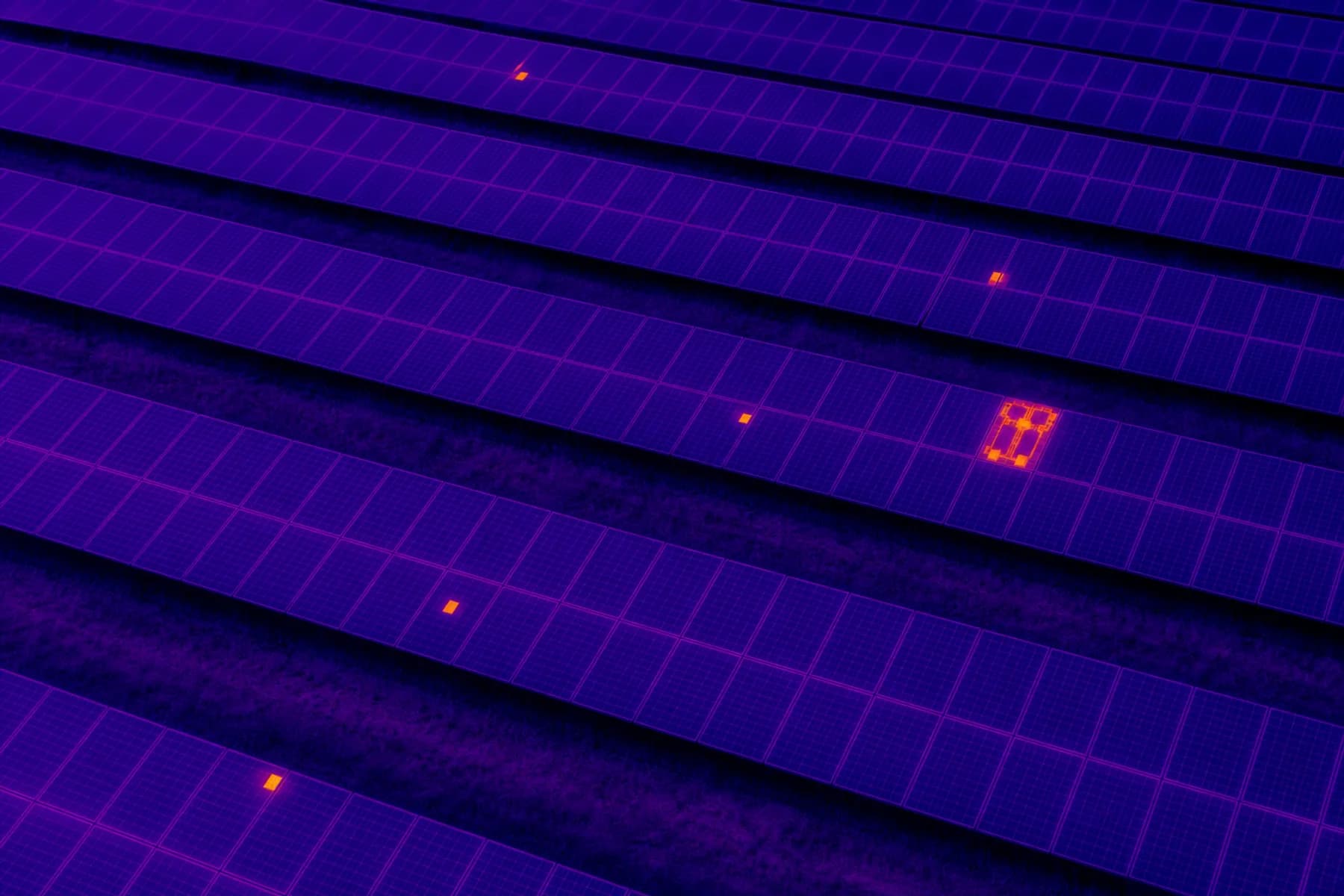
Large PV plants can produce thousands of thermal observations in a single campaign. Without consistent capture and a structured review model, teams can spend more time sorting imagery than deciding what to repair.
A reliable workflow preserves the radiometric source, pairs it with RGB context, links the observation to the module or array location, and uses ML/DL computer vision to support—not replace—technical review.
Protect the quality of the source data
Mission planning should define irradiance and weather criteria, tracker or tilt state, altitude, overlap, viewing angle, and exclusions. Radiometric files should remain available for analysis instead of relying only on exported color palettes.
The team should also record known outages and operating constraints so a cold or unusual pattern is not misclassified simply because part of the plant was not producing normally.
Use a pattern taxonomy that engineers can review
Useful categories include localized hot cells, module-level heating, bypass-diode patterns, junction-box heating, string-level behavior, and uncertain thermal observations. Each label should carry a confidence level and supporting visual evidence.
Computer vision improves consistency and throughput by surfacing candidate anomalies and grouping similar signatures. Final disposition still needs site context and, where required, follow-up electrical testing.
Rank work by consequence, not color alone
A bright thermal palette can make every anomaly look urgent. A better priority model considers temperature relationship, spatial pattern, affected asset count, repeat occurrence, performance correlation, fire or safety relevance, warranty position, and ease of access.
- Investigate promptly when the pattern is severe, repeated, or safety-relevant.
- Plan corrective work when evidence is credible but immediate risk is limited.
- Monitor when confidence or operational significance is low.
Retain evidence through closeout
Every finding should preserve the source images, asset reference, coordinates, review status, recommended action, and closeout evidence. Repeat thermal capture under comparable conditions can confirm whether the intervention resolved the observed behavior.
Operational perspectiveThe goal is not to automate certainty. It is to help engineering teams review more consistent evidence and move the right anomalies into the right maintenance path.