
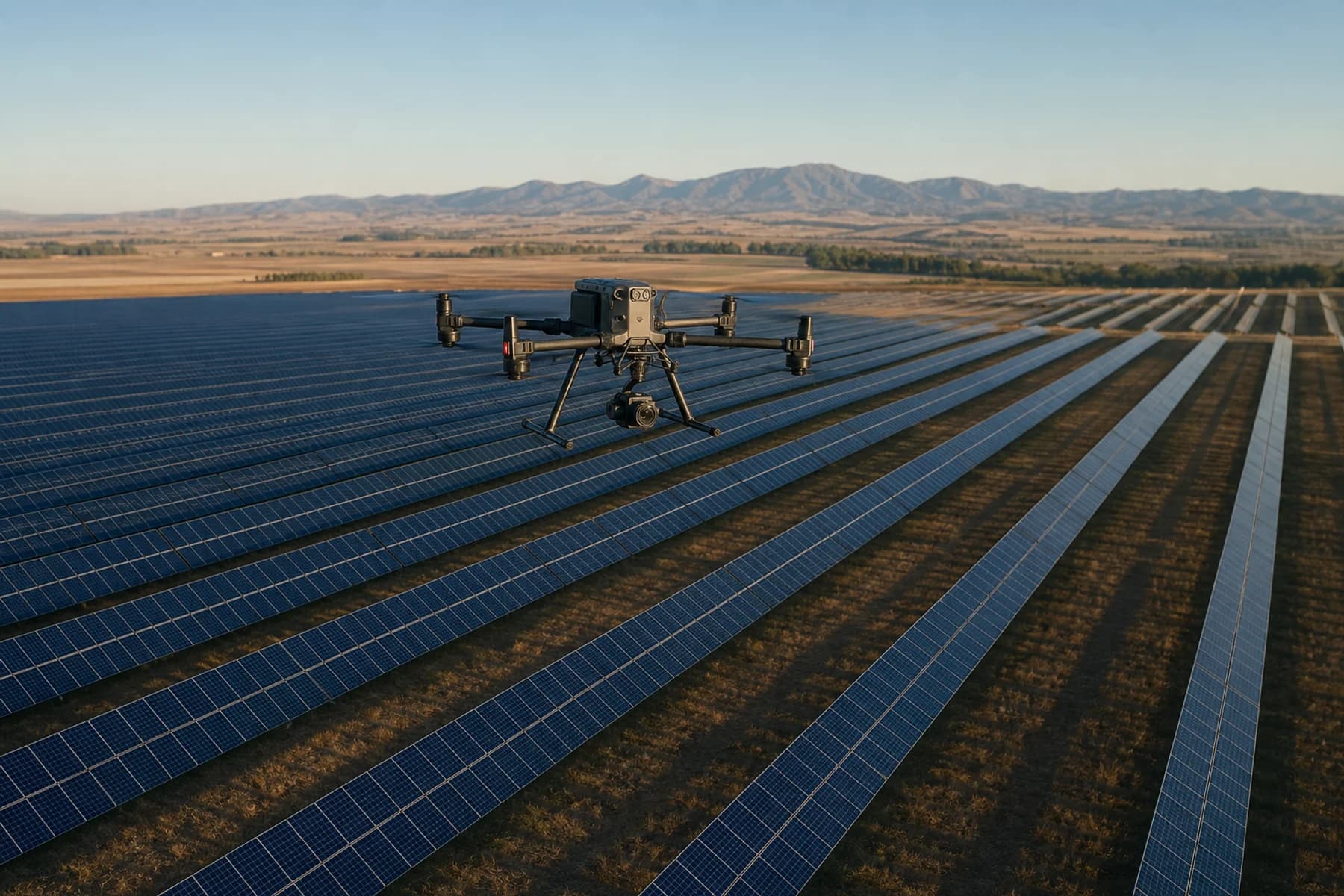
Repeatable RGB data collection across the complete PV field.
Solar Farm Inspection
Module-level evidence for every watt at risk.
MAR SolarCare combines calibrated RGB and radiometric thermal capture with ML/DL computer vision to build a complete, location-aware view of PV plant condition. The result is not a folder of images—it is a prioritized operating plan for cleaning, maintenance, engineering review, and verified closeout.
From inspection evidence to field execution
Cleaning intelligence
Map non-uniform soiling, vegetation, shading, drainage, and access constraints so cleaning resources are directed to the areas with the strongest operational case.
Maintenance planning
Prioritize module, tracker, cabling, connector, combiner, inverter, and balance-of-system checks with exact field locations and supporting evidence.
Fault detection
Use RGB and radiometric datasets with ML/DL analysis to surface potential defects, classify patterns, and prepare findings for engineering review.
What we inspect and analyze
Thermal anomalies
Identify hot cells, module hotspots, bypass-diode patterns, junction-box heating, and string-level anomalies under suitable operating conditions.
Module & array condition
Document visible glass, frame, backsheet, cabling, connector, mounting, and tracker issues with clear location context.
Environmental losses
Map soiling patterns, vegetation encroachment, persistent shading, drainage concerns, and access constraints that affect output or maintenance.
Performance correlation
Connect field evidence with available inverter, combiner, and string data to distinguish isolated defects from wider performance issues.
ML/DL anomaly analysis
Apply computer-vision models to thermal and RGB datasets to surface patterns, group similar findings, and accelerate anomaly classification across large sites.
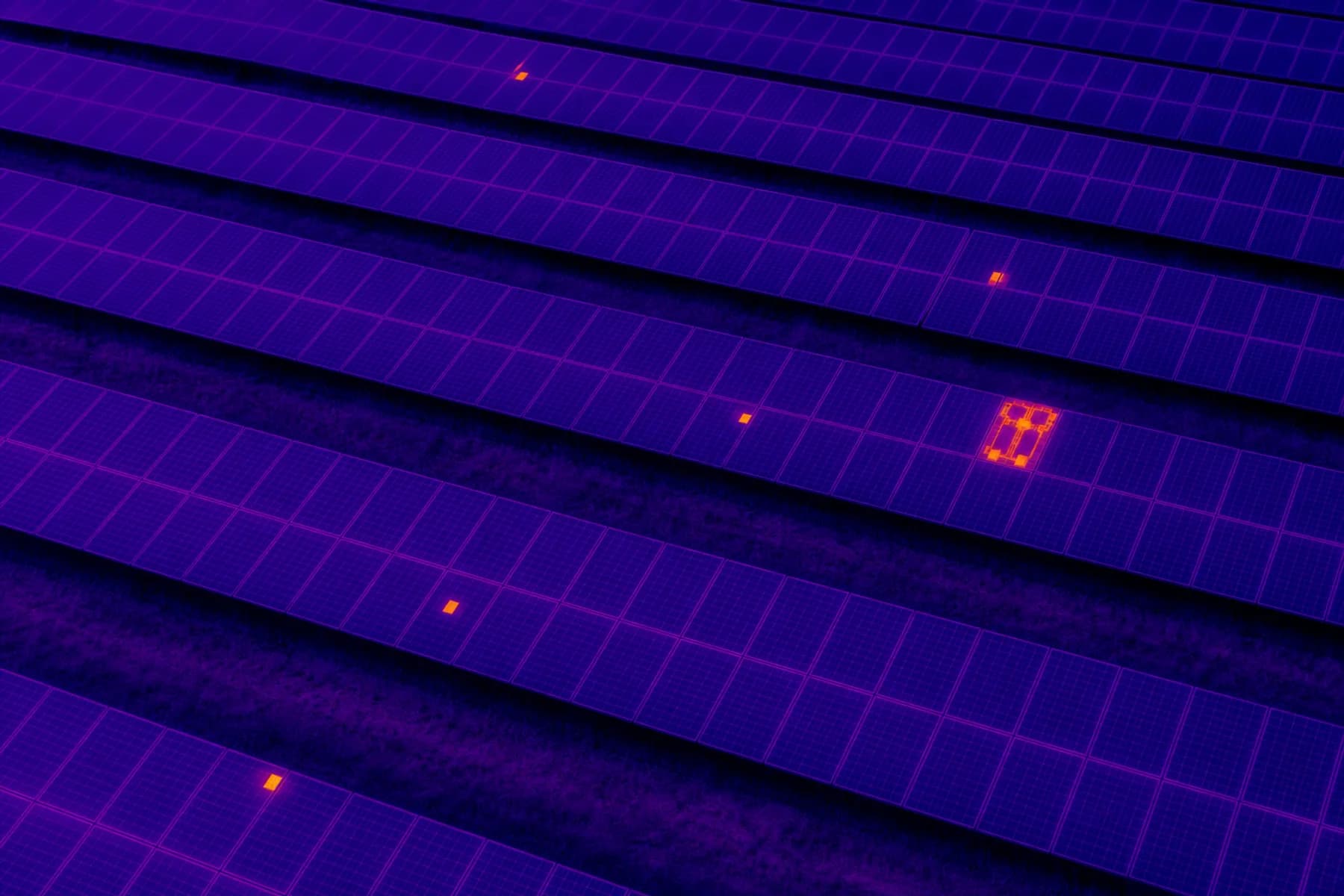
Sparse thermal anomalies isolated for module-level engineering review.
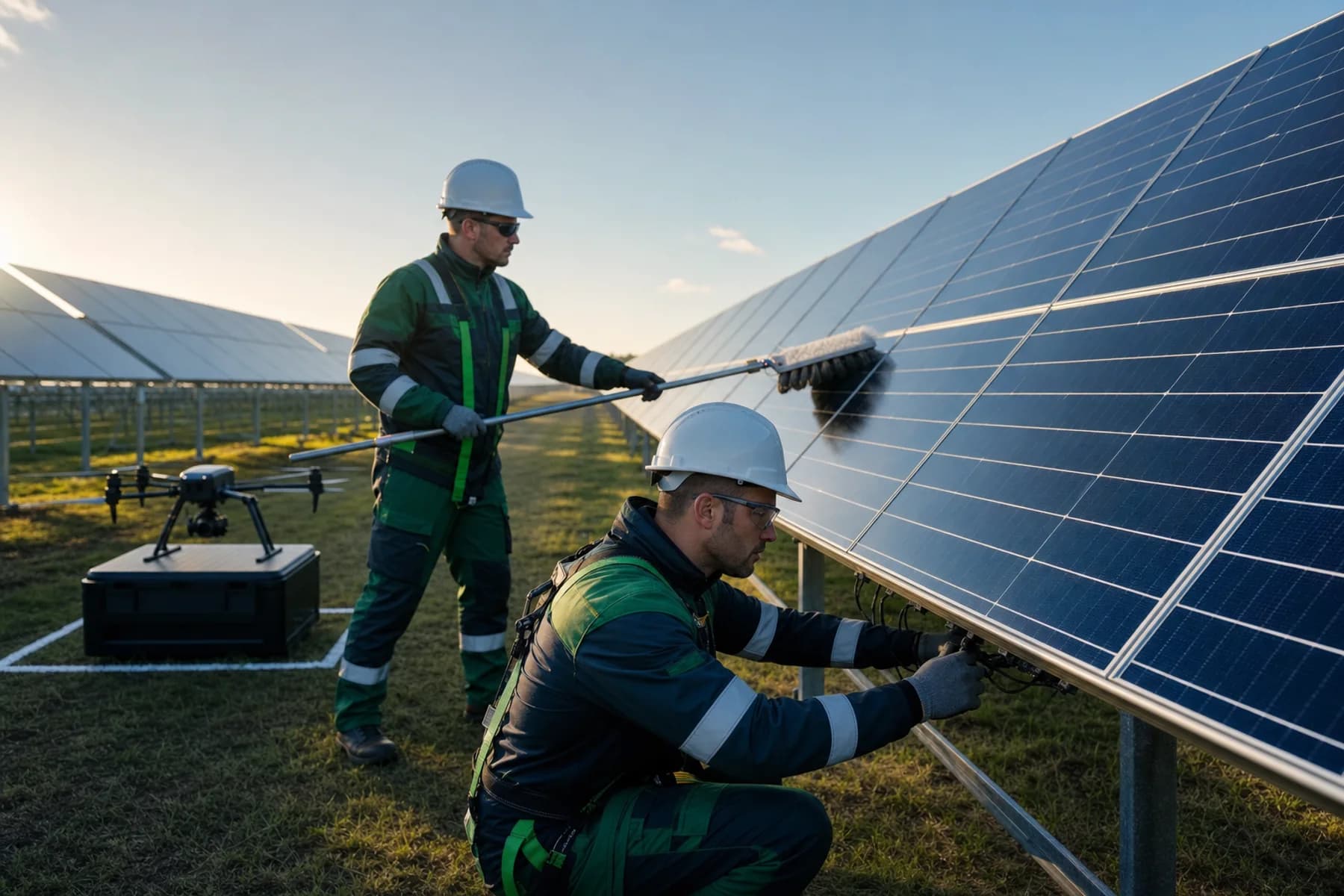
Drone evidence converted into focused cleaning and maintenance work.
A controlled path from capture to action
Scope & safety
Review layouts, asset hierarchy, access, operating state, irradiance requirements, and site controls before mobilization.
Capture
Fly repeatable thermal and RGB missions with consistent overlap, geometry, and asset coverage.
Classify
Use ML/DL computer vision to detect and classify anomalies, assign severity, and attach paired evidence to the correct module, table, or array zone.
Act & verify
Issue cleaning and repair priorities, track field action, and use repeat capture to verify closeout and retain condition history.