
What a repeatable drone blade inspection should capture
Close-range imagery is only the start. A useful blade program preserves surface coverage, defect location, severity, progression, and repair-ready evidence.
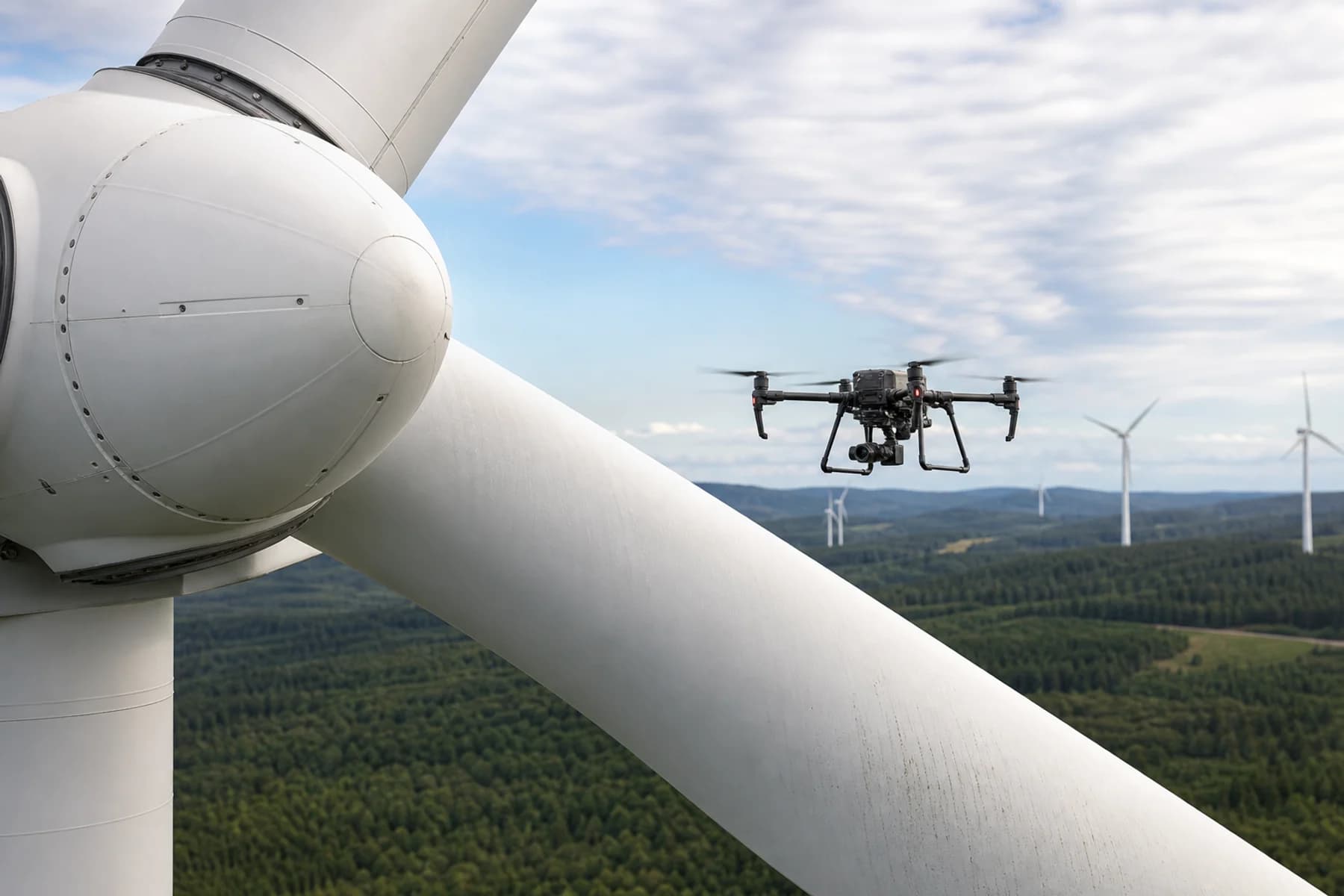
Drone blade inspection can reduce the time technicians spend exposed at height, but a fast flight is not automatically a good inspection. Image sharpness, angle, overlap, turbine state, lighting, wind limits, and blade references all influence whether a reviewer can locate and compare a finding later.
The operating objective is a repeatable record of each blade surface—from root to tip—that supports engineering review and maintenance-campaign planning.
Control the turbine and the capture geometry
Inspection planning should coordinate turbine shutdown or approved inspection state, blade positioning, local wind and weather limits, safe flight zones, and site communications. The pilot needs predictable stand-off and overlap while retaining sufficient detail for review.
Build complete blade-surface coverage
The capture plan should cover blade root, mid-span and tip; leading and trailing edges; pressure and suction sides; and visible seam or bond areas. Hub, spinner, nacelle, vents, hatches, and tower exterior may be added when they are part of the scope.
- Leading-edge erosion and coating loss
- Visible cracks, impact marks, and lightning evidence
- Contamination, drainage streaks, and surface deposits
- Visible seam, bond-line, or trailing-edge anomalies
Classify consistently, then apply engineering context
ML/DL computer vision can identify candidate surface patterns and keep terminology consistent across a fleet. Reviewers then consider defect dimensions, location, image confidence, repair history, turbine environment, and applicable engineering criteria before setting a disposition.
Plan campaigns and verify repairs
Grouping findings by turbine, access method, repair type, severity, and weather window turns the inspection into a campaign plan. After work is complete, targeted imagery should confirm the repair area and preserve the new baseline for comparison.
Operational perspectiveA premium blade inspection is measured by coverage, traceability, and decision quality—not simply by how quickly the drone returns to the ground.