
How to design a utility-scale drone inspection campaign
Fleet-scale inspections succeed when safety, asset data, capture standards, review rules, and field handoff are designed as one operating system.
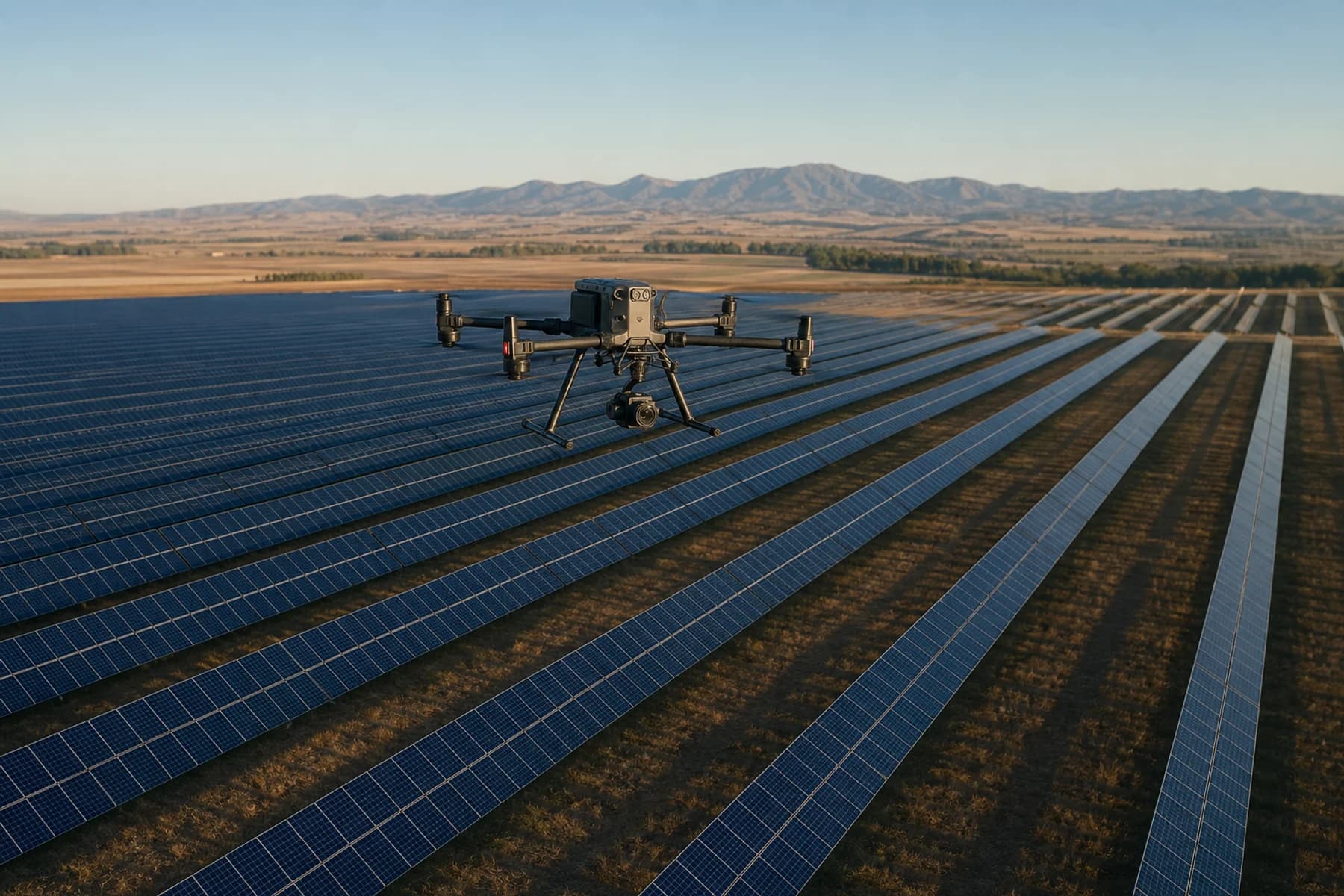
Scaling from a demonstration flight to a portfolio inspection is primarily an operations challenge. Sites differ in access, asset naming, weather, network availability, operating constraints, and stakeholder expectations.
A campaign should therefore be designed backward from the decisions it must support. The required evidence, taxonomy, turnaround, and field outputs determine how capture and review should be organized.
Define the decision and the inspection unit
Clarify whether the campaign supports commissioning, routine condition assessment, warranty evidence, cleaning optimization, storm response, or maintenance verification. Then define the smallest asset location that must be reported consistently.
Build field quality into the plan
Site packets should include access contacts, flight constraints, safety interfaces, asset maps, naming conventions, operating requirements, weather limits, capture geometry, and escalation paths. Sample data should be checked early enough to correct issues before the full site is flown.
Create a controlled review pipeline
ML/DL models can accelerate anomaly detection and classification, while reviewers resolve ambiguous cases and apply asset context. Quality checks should cover missed areas, image suitability, asset mapping, duplicate findings, taxonomy consistency, and evidence completeness.
Make the field handoff executable
Reports should group work by site, asset, severity, access method, discipline, and recommended timeframe. Structured exports are often as important as the final PDF because they allow findings to enter the owner's maintenance system without re-keying.
- Provide clear asset references and GPS context.
- Preserve paired evidence and reviewer notes.
- Track accepted, deferred, completed, and verified states.
Operational perspectiveThe best turnaround is the fastest cycle that still protects capture quality, engineering review, and a useful maintenance handoff.