
Combining RGB and thermal drone inspection for wind-turbine maintenance
A combined inspection program can connect visible blade condition, external turbine anomalies, maintenance history, and appropriate thermal evidence without treating either sensor as a standalone diagnosis.
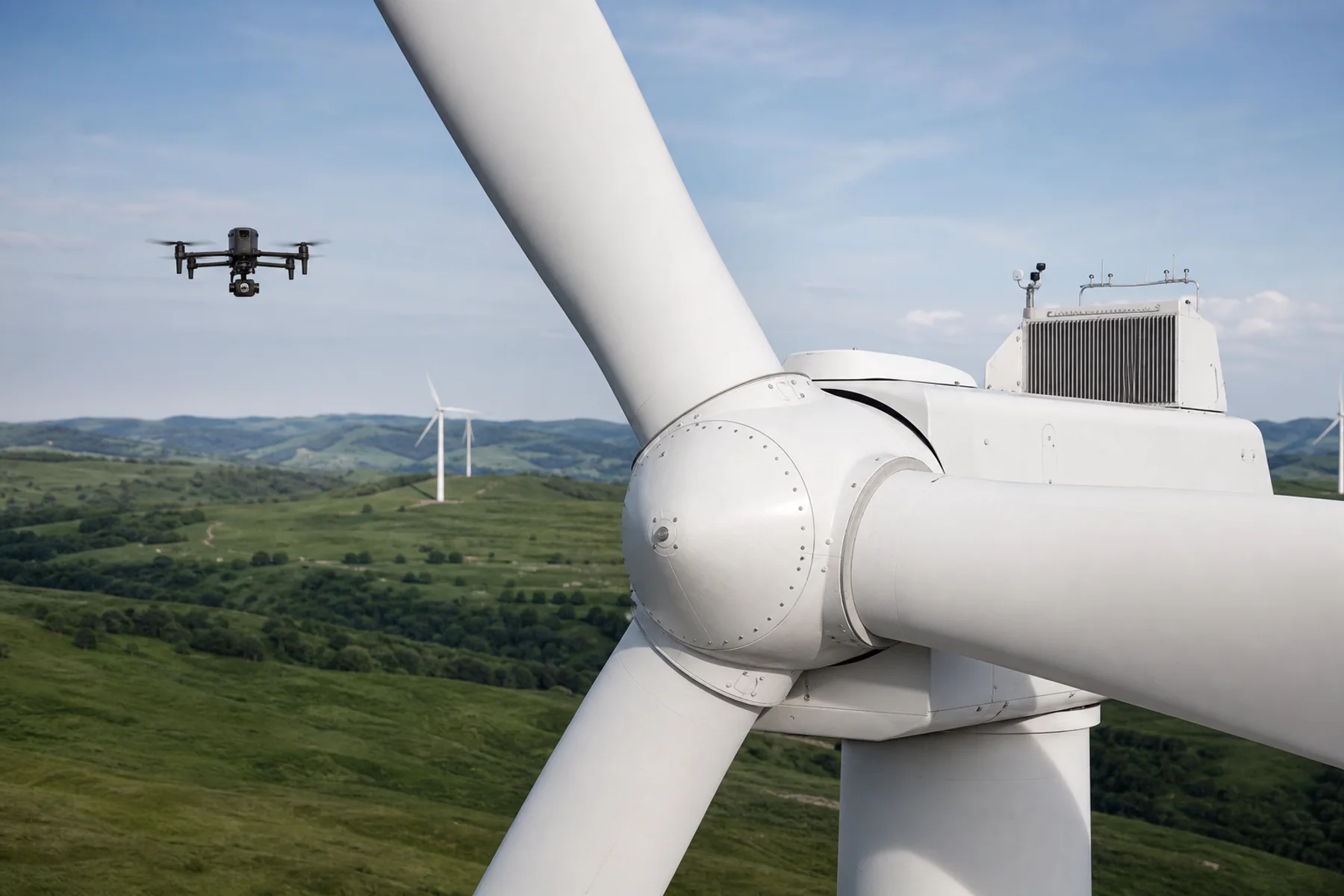
Wind assets present two related inspection challenges. Blades require complete close-range surface coverage, while hubs, nacelles, spinners, towers, vents, and external interfaces require wider condition context. RGB imagery is the primary evidence source for visible surface condition; thermal capture can add value when the component, operating state, environment, and inspection objective support a meaningful comparison.
The strongest program defines those objectives before flight. It identifies which components can be assessed externally, how the turbine will be controlled, what operating data is available, and how observations will move into engineering review and maintenance planning.
Define where each sensor adds value
High-resolution RGB capture is suited to visible conditions such as leading-edge erosion, coating loss, contamination, cracks, lightning evidence, drainage streaks, external corrosion, damaged covers, and seal or interface concerns. Appropriate thermal inspection can help surface unusual external heat patterns, but only where operating conditions and component accessibility make the observation technically meaningful.
A thermal color difference should be treated as an observation for review. Solar loading, wind, reflections, surface materials, viewing angle, internal heat paths, turbine load, and recent operating history can all influence the apparent pattern.
Plan a controlled and repeatable mission
The site team should coordinate turbine shutdown or the approved inspection state, blade positioning, exclusion zones, local wind limits, communications, and safe approach paths. Capture standards should define distance, overlap, focus, exposure, surface coverage, and the required views of the hub, nacelle, spinner, and tower exterior.
- Confirm turbine and blade identifiers before mobilization.
- Document weather, operating state, and relevant alarm or maintenance context.
- Use consistent blade-surface and span references across repeat campaigns.
- Keep the aircraft at approved standoff and clear of the structure at all times.
Build one condition register from both datasets
ML/DL computer vision can surface candidate visual and thermal patterns, group similar observations, and improve classification consistency across a fleet. Reviewers then combine the imagery with turbine history, defect dimensions, component location, confidence, and operational consequence.
The maintenance register should distinguish cleaning, monitoring, engineering assessment, rope-access confirmation, component investigation, and planned repair. Paired evidence should remain attached to the same turbine and component record instead of being split into unrelated RGB and thermal reports.
Use repeat capture to verify change
Consistent viewpoints allow teams to compare erosion, coating condition, contamination, external corrosion, repaired areas, and selected thermal observations over time. This helps planners distinguish stable conditions from progressing damage and provides objective evidence after cleaning or repair.
Fleet-level summaries can then group similar work by turbine, repair method, access requirement, severity, and weather window—turning inspection data into a more efficient maintenance campaign.
Operational perspectiveRGB and thermal capture are most valuable when they feed one controlled condition workflow. The objective is better evidence and prioritization for engineering teams—not an unsupported autonomous diagnosis.